Outlook for Atlantic and Pacific 2021 Hurricane Seasons
Atlantic Season
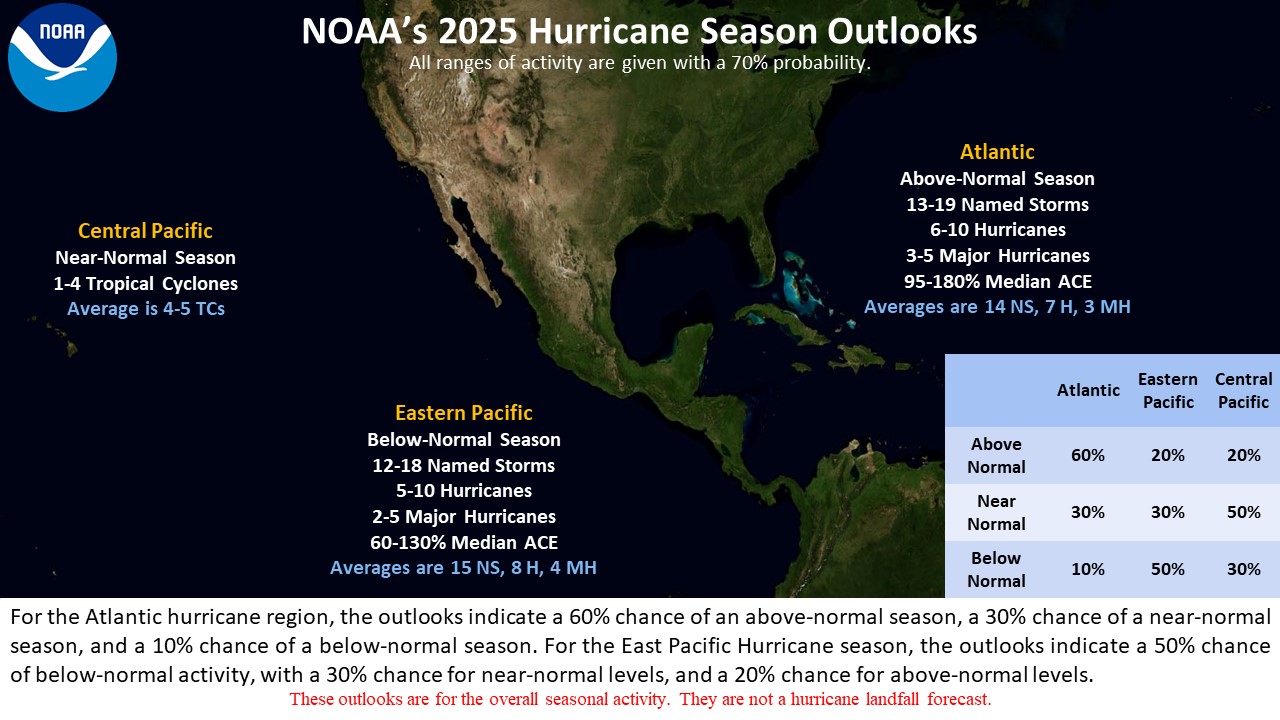
June 1st marked the official start date of the Atlantic hurricane season. Running to the end of November, the forecast for the 2021 season is that it will be active with a 60% chance of reach above-average levels according to the National Oceanic and Atmospheric Administration (NOAA). There are predictions of 13-20 named storms, where 6-10 of those would be hurricanes, and 3-5 of those may turn to major hurricanes with winds of 111mph or higher at category 3, 4, or 5 designations. The season is just beginning as three storms have already been named, Anna, Bill, and most recently Claudette which struck last weekend and has been linked to 14 deaths.
Pacific Season
On the other side of the North American mainland, the Eastern and Central Pacific 2021 hurricane seasons each have a 20% chance of being above normal according to reports from the NOAA. Both seasons run from relatively the same start date to the end of November. The Eastern Pacific season is predicted to have only 2-5 major hurricanes.
Looking Back on 2020
Cities along the East Coast are hoping for the lower end of the predictions to hold true as the 2020 season was especially difficult for populations along the shoreline. Last year, the season broke multiple records on its way to becoming one of the most active seasons in recorded history with 30 named storms, including 13 hurricanes and six major hurricanes. Not only was the season itself tough to navigate, but last season also coupled with COVID-19 to make things much worse. Navigating a pandemic while hurricanes strike creates a dual-disaster situation that can be tough to respond to and recover from. While the pandemic is not completely behind the United States, this year it will be much less of a concern with vaccination rates steadily rising and cases decreasing.
Four Aspects of a Hurricane
While hurricanes are never fully preventable, there are ways to mitigate the effects and prepare a community for the inevitable. Resources on Restore Your Economy detail action steps for communities to follow in every phase of a disaster. In terms of mitigation, increasing resiliency and strengthening infrastructure are two key activities for any community to take on. With preparation, it is important to engage with your local business community and have disaster response plan with clear definitions of leadership and other action steps. When a hurricane hits, the response helps address immediate concerns like business re-entry and recovery centers, while addressing housing issues and health concerns. Lastly, the recovery phase can be broken into two periods, short-term and long-term, and details the restoration process for a community.
Relevant resources can also be found on Ready.gov, a site dedicated to disaster education for American citizens. Also, you can stay updated on the current season with maps and trackers from the NOAA.